-
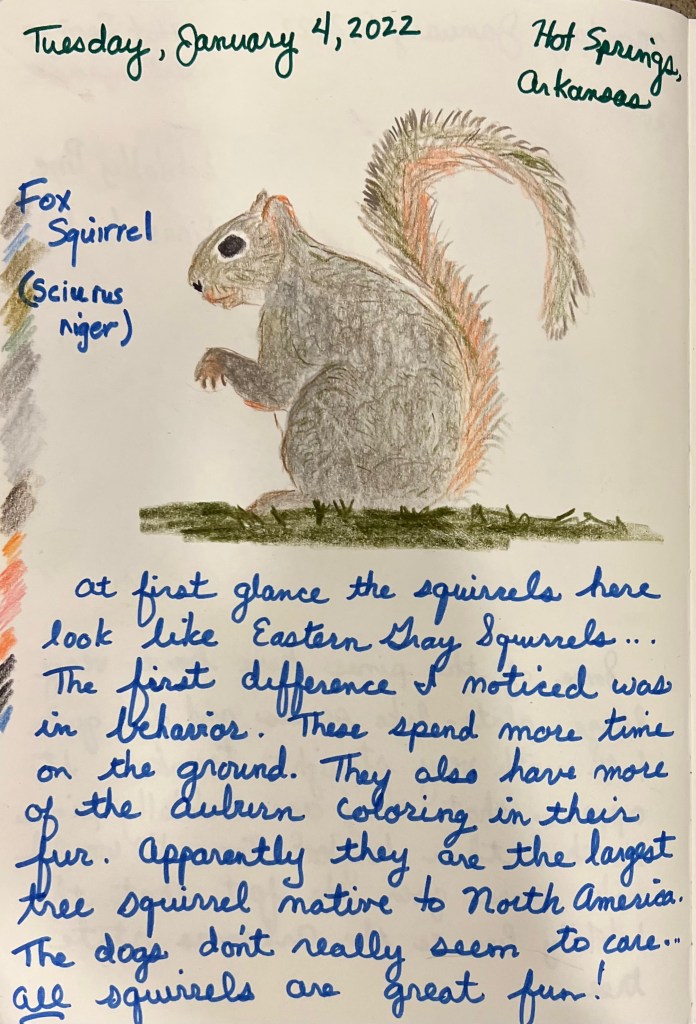
Tuesday, January 4, 2022
Fox Squirrel
(Hot Springs, Arkansas)
Sciurus niger
-
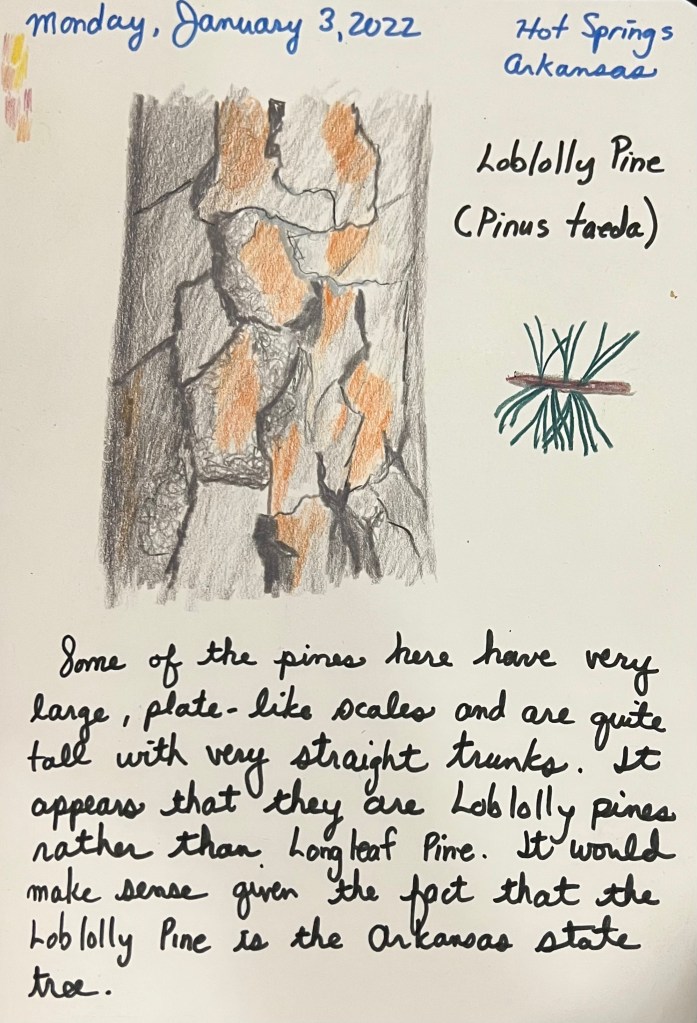
Monday, January 3, 2022
Loblolly Pine
(Hot Springs, Arkansas)
Pinus taeda
-
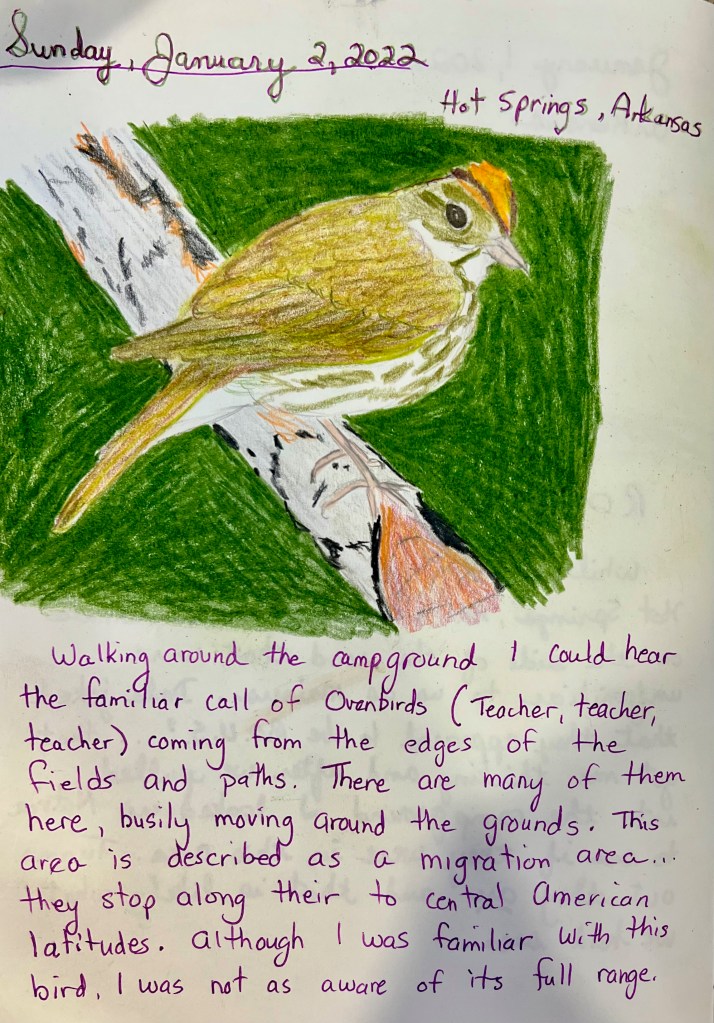
Sunday, January 2, 2022
Ovenbird
(Hot Springs, Arkansas)
Seiurus aurocapilla
-
Saturday, January 1, 2022
Coypu or Nutria (Hot Springs, Arkansas)
Myocaster coypus

-
Sunday, August 7, 2022
Common Slipper (Searsport, Maine)
Crepidula fornicata
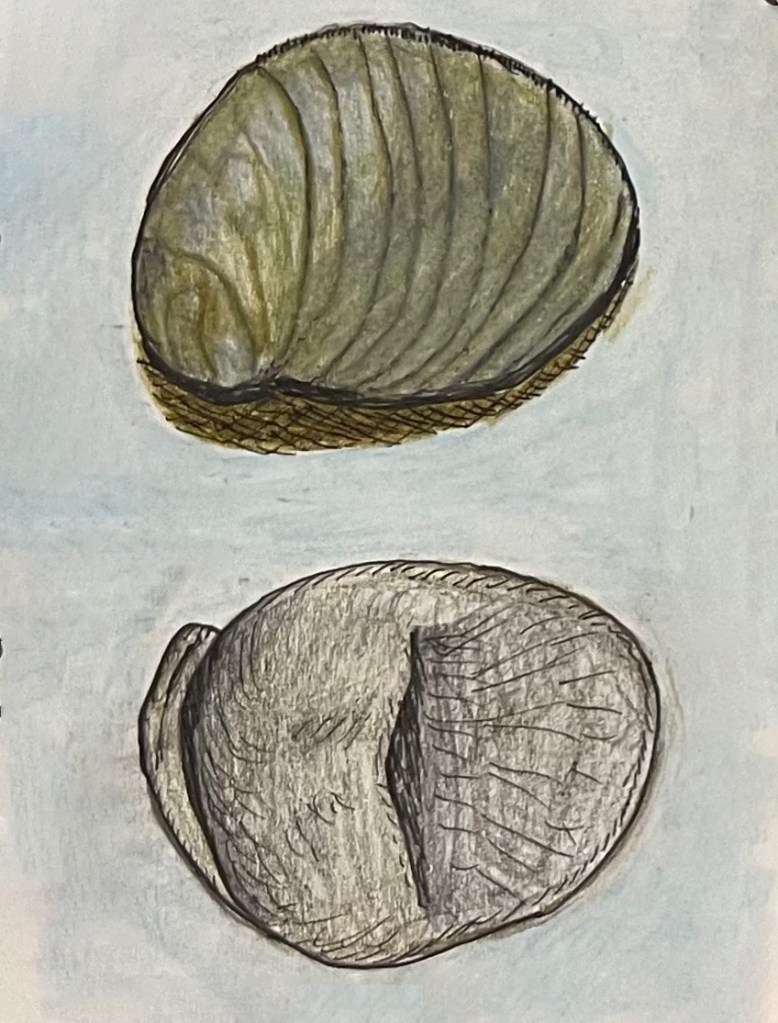
I had the chance to poke around in the intertidal zone today with Tim and Tom Davis. we found LOTS of really big slipper shells near the low tide line.
The Common Slipper is native to the shores of the Eastern US, but has been introduced in many other parts of the world. They prefer sheltered areas of bays, down to a depth of 70 meters. They feed on plankton and detritus.
They can get up to 2 inches in size. They are a species of sea snail, with a shelf-like structure inside the shell.
There is much variability in the shape of their shells with some being much more arched than others. The animal is a serial hermaphrodite…young animals are usually male, but shift to female when the conditions and their size is right. They are often found in columns of animals, with the older (female) ones at the bottom of the column and the small males at the top. As the older females at the bottom die, the remaining ones near the bottom will shift to females if they haven’t already.
-
Saturday, August 6, 2022
Dog Day Cicada (Searsport, Maine)
Neotibicen canicularis
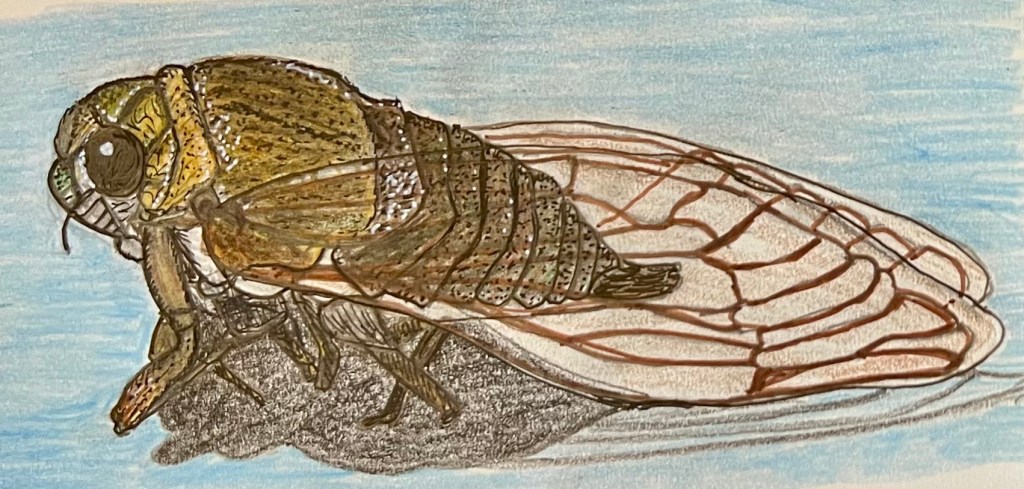
We have been hearing the buzzing of cicadas for the last few days. I remember hearing somewhere (when I was young) that they only sing when it was at least 80° F where they were sitting, but I don’t think that is true. I do know that the frequency of the buzz is affected by temperature…. I never actually saw one of these strange looking creatures until I was an adult.
The Dog Day Cicada gets its name from the time of the year when you are most likely to hear them singing. The adults start to sing in the “dog days” of summer, when temperatures are higher here in the Northeastern US. This is also the time of the year when the Dog Star (Sirius) is visible in our night skies.
They are not a periodical cicada (whose eyes are red) but emerge more frequently (or at least not in a simultaneous “brood” emergence as is true for the 17 year species). There is still debate on their actual life cycle, but I do know that we hear them every summer here.
There are over 160 species of cicada in the United States, but it is very hard to see them. The adults are usually up in the trees and blend in extremely well.
-
Friday, August 5, 2022
Harbor Seal (Searsport, Maine)
Phoca vitulina
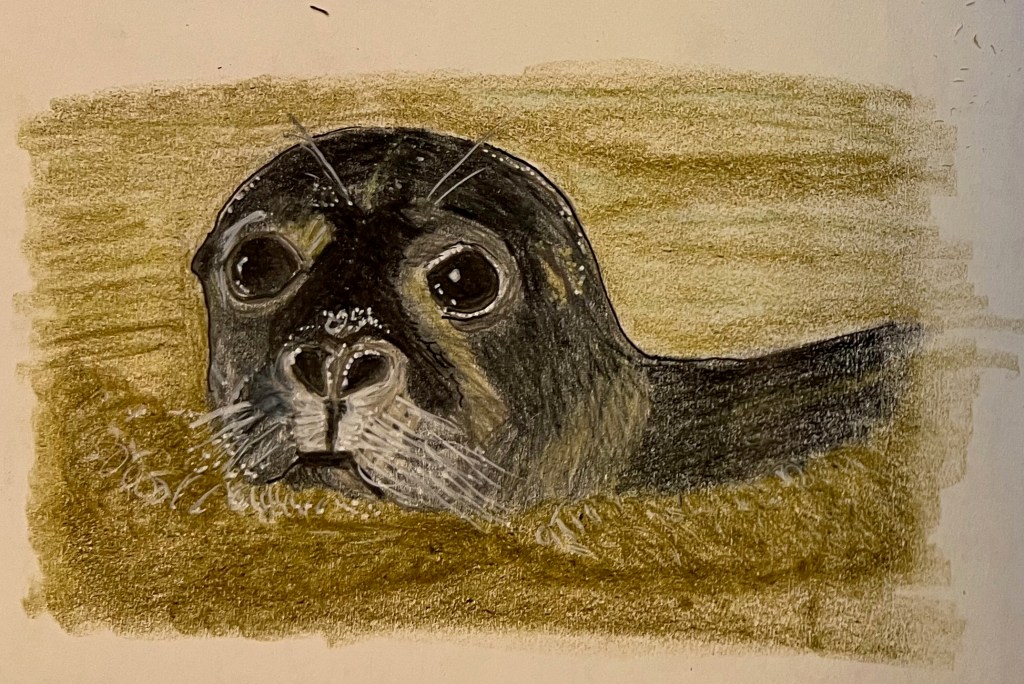
Last night we had dinner down at the shore with friends. We were treated to the sight of a Harbor Seal bouncing around in the waves right in front of us. I always love to watch them.
Harbor Seals are one of the most common marine mammals along the U.S. coasts. They are often seen when they are hauled out on rocks or the beach, which they do to rest and to regulate their body temperatures. While hunting, they can stay underwater for up to 30 minutes!
They are a true seal, with short fore limbs. They cannot move their hind flippers forward (their pelvis bones are fused) so they move with an awkward motion while on land. They are very agile in the water where they hunt fish, shellfish, and crustaceans.
The pups are about 24 pounds at birth and can swim as soon as they are born. Adults can reach weights of up to 285 pounds and lengths of 5 to 6 feet. Males are slightly larger than the females.
-
Thursday, August 4, 2022
Gall (Gall Wasp?) Searsport, Maine
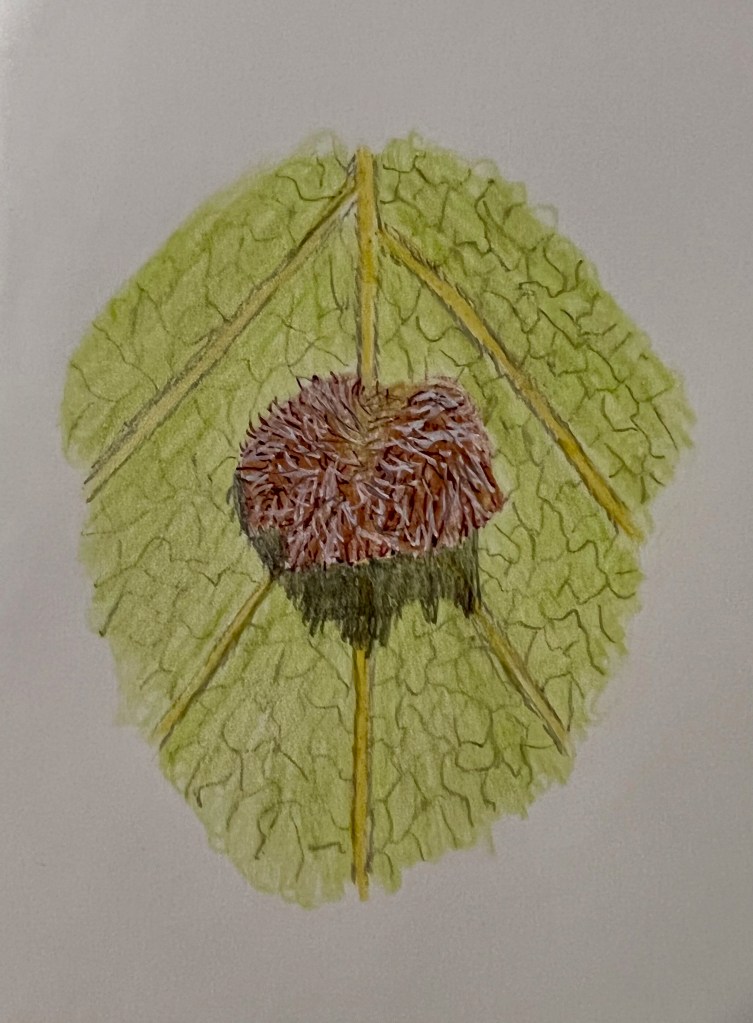
There are a few of these fuzzy galls on the underside of the leaves of the maple tree that is next to our RV. I hadn’t noticed galls like this before…all of the others had smooth surfaces rather than fuzzy as these ones are.
Galls are an abnormal growth of a plant in reaction to chemicals injected by insects while laying their eggs on (in) the plant. Galls don’t usually kill the plants.
There are many insect species that induce galls. The insects are very specifically adapted to a particular plant species. They must inject exactly the right chemicals to “trick” the plant into producing a structure that will protect and nourish their larvae.
This particular type of gall was about the size of my pinky nail.
-
Wednesday, August 3, 2022
Carolina Locust (Searsport, Maine)
Dissosteira carolina

Vinnie (one of our standard poodles) has taken to hunting locusts every day. She has learned where they can be found and regularly patrols there…getting so excited when they fly up and away from her.
Carolina locusts are a type of short-horned grasshopper found throughout North American and southern Canada. They get almost 2″ long, with the females being slight larger than the males. They are found in open areas (meadows and fields).
They eat a variety of plants but don’t usually devastate crops as much as some other locust species do.
They make a distinctive noise when they fly…and often hover. They look like some strange kind of butterfly when they are on the move.
-
Tuesday, August 2, 2022
Curly Dock (Searsport, Maine)
Rumex crispus
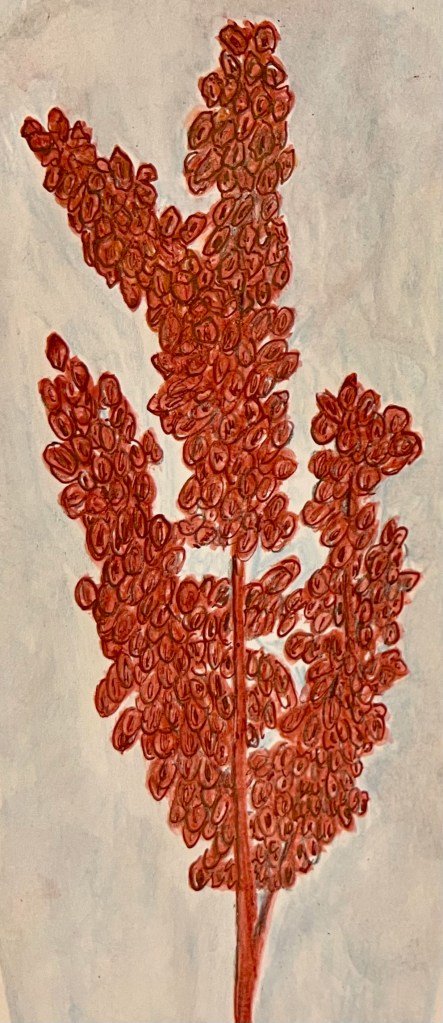
The flower bed in the abandoned site next to the RV has three, big curly dock plants sticking high above the hostas. The red of the dock is a sharp contrast to the yellow of the narrow-leaf goldenrod that has also established itself in the little garden and is in full bloom.
Curly dock grows throughout the U.S. and southern Canada. The plant gets the first part of its name from the curled or wavy edges on the leaves. It is a member of the buckwheat family and can be eaten by humans (in small amounts, when the plant is young) but is toxic to cattle, horses, and sheep due to the oxalic acid it contains. This acid gives the leaves a sour taste that many people enjoy. The leaves are a dark green when they emerge, but progressively turn more red/purple as the season progresses.
The plant has been used medicinally as an anti-inflamatory. A single plant can produce more than 40,000 seeds and can grow over five feet tall. The seeds are enclosed in a papery, winged structure that allows them to float on water. This aids in their dispersal.
-
Subscribe
Subscribed
Already have a WordPress.com account? Log in now.
 I Wonder, I Wander