-
Monday, August 1, 2022
Monarch Butterfly (Searsport, Maine)
Danaus plexippus
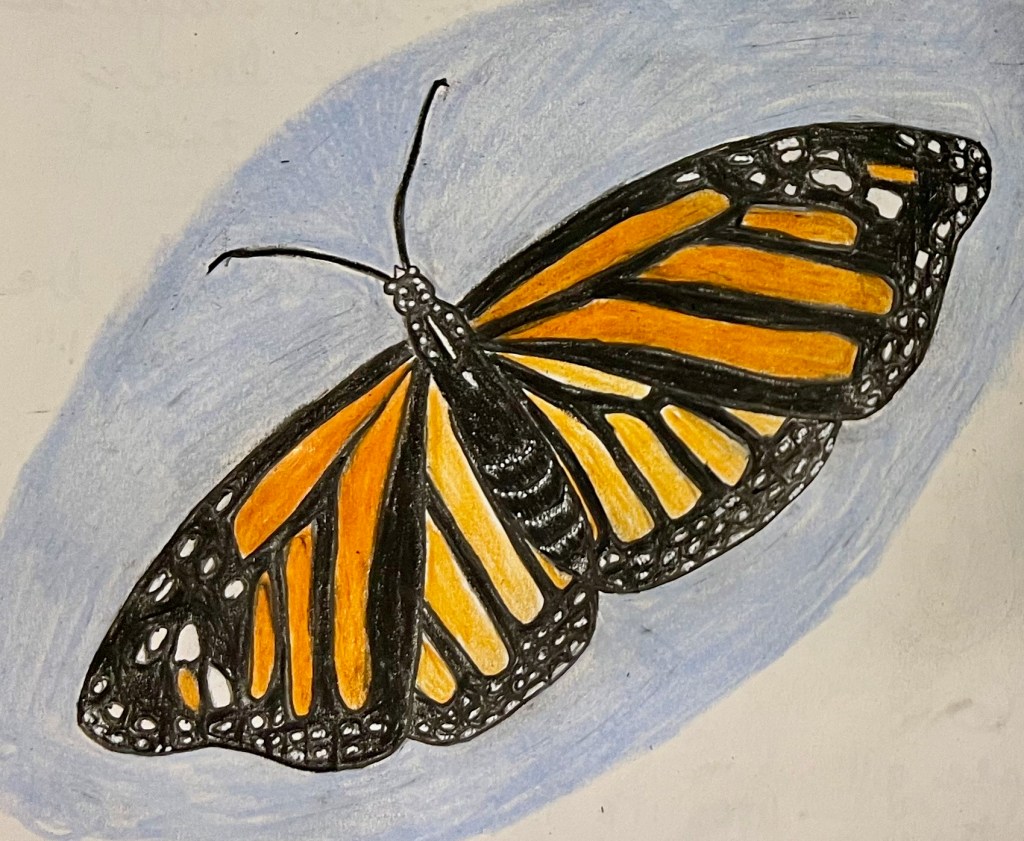
We started seeing Monarchs here over the last couple of days. Yesterday while we were taking our morning walk on the beach, we saw a Monarch being chased by a Merlin. As agile as the little falcon was, the butterfly still got away!
The Monarch is one of the most familiar of the North American butterflies and was the first butterfly to have its genome sequenced. There are 3 species of monarch, with six recognized sub-species.
They feed on milkweed (exclusively as caterpillars) but aren’t particularly good at pollinating them. Because they eat milkweed and concentrate the toxins from the plants in their bodies, they are not especially palatable to most predators.
Monarchs have four life stages (egg, larva, pupa, and adult). The adults are 3.5 to 4 inches across, with males maturing slightly larger than females. The adults migrate thousands of miles in the winter.
-
Sunday, July 31, 2022
Tortoise Shell Limpet (Searsport, Maine)
Acmaea testudinalus
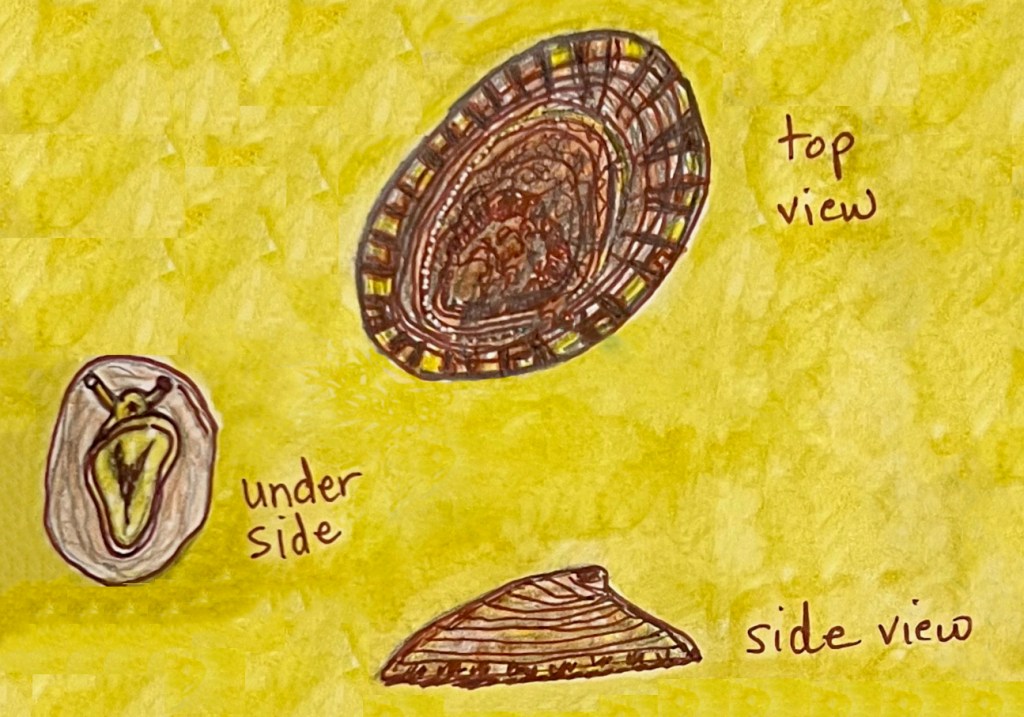
I found a nearly intact limpet shell this morning, along the line of seaweed left by the last high tide. When I was snorkeling a week or so ago, I saw lots of them on the rocks mixed in with the barnacles and whelks. I remember hunting for these as a child on that very beach.
They are a cold water species, common in Maine coastal waters. As adults they live in the lower inter-tidal zone. They go through several larval stages before settling down to life on the rocks. The sexes are separate (not hermaphrodites).
They are a true limpet, one of the sea snails, and a member of the Lottiidae family. Individuals can get to over an inch across. Their shell peak is off-center.
They are herbivores, grazing on algae with their radula. They use their foot to adhere to rocks and to move across them.
-
Saturday, July 30, 2022
Osprey (Searsport, Maine)
Pandion haliaetus
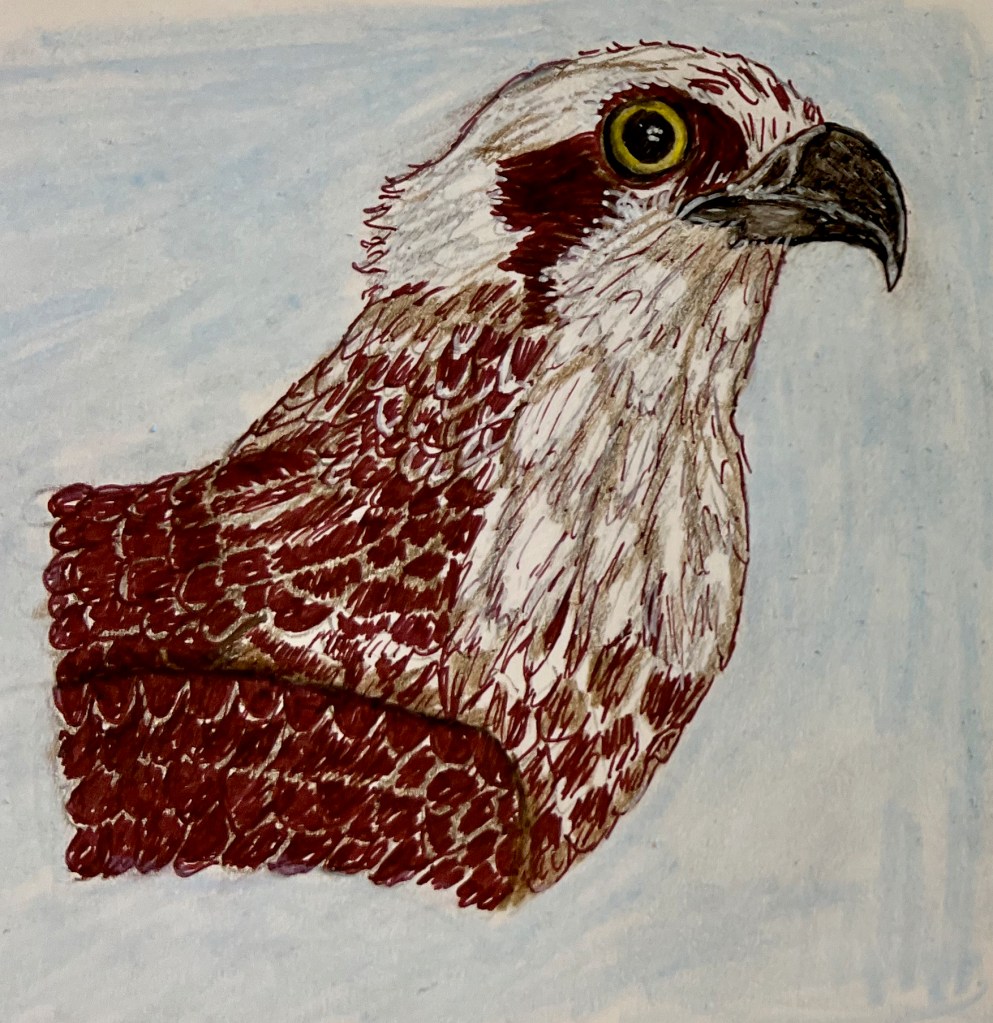
We see ospreys every day here…many times they are carrying a fish. We hear them calling back and forth often. Chicks are fledging from the local nests now.
When looking for something new to learn about this species, I found the following:
This species is also know as a Fish Hawk, which makes sense as fish make up most of their diet. Osprey have been known to successfully capture and carry off fish that weighs up to 4.5 lbs!
They are usually around 24 inches long with a wingspan of over 70 inches. There is a slight size difference between males and females, with males being slimmer.
They mature at around 4 years of age and are the second most widely distributed raptor species.
There is some debate on the number of species in their genus. Some sources list one species with four sub-species, whereas others list a population in Australia as a separate species rather than one of the four sub-species.
Unlike most hawks, the osprey has toes that are all of equal length.
They have excellent eyesight and can spot fish from over 100 feet in the air, often hovering in place before they dive at astonishing speed to capture them.
When in flight, they have a “gull-like drop” to the tips of their wings. This and the distinctive face markings make them fairly easy to ID.
-
Subscribe
Subscribed
Already have a WordPress.com account? Log in now.
 I Wonder, I Wander